












The Lavin Agency Speakers Bureau
A speakers bureau that represents the best original thinkers,
writers, and doers for speaking engagements.

What if everything we’ve been told about ADHD is wrong? What if a wandering mind—in ourselves or in our children—isn’t a sign of deficit or disorder at all, but simply a different way of experiencing the world?
In this insightful talk, New York Times bestselling author Paul Tough explores the cutting-edge research going on in neuroscience labs around the world and comes back with a surprising prescription: the first step in regaining control over our attention isn’t to blame—or medicate—ourselves. It’s to shift our relationship with the distracting world around us: embrace our curiosity, understand our natural limits, and listen to the story our attention is trying to tell us.


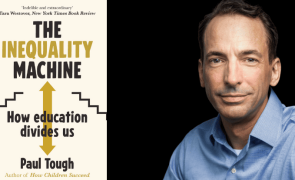
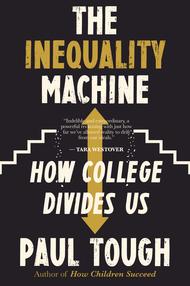
Why are young people today so stressed out about getting into their preferred school? In his latest book, The Inequality Machine, Paul Tough investigates higher education and reveals how complicated, crazy, and unfair the college admissions system has become. In this talk, he argues that our obsessive focus on getting our kids into prestigious colleges actually undermines the kind of character strengths that we want to develop in our children. The admissions anxiety that dominates many schools and communities often has the effect of turning complex, idealistic teenagers into stressed-out, competitive monomaniacs. Tough locates the roots of that madness in recent shifts in the economy and higher education, and proposes solutions that schools and parents—and society as a whole—can take to bring sanity back to the process of college admissions.

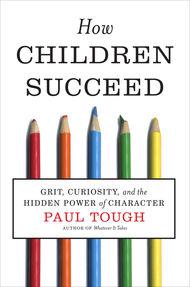
Our society currently places a great deal of emphasis on intelligence as the sole indicator of value in children’s education. But in this talk, Paul Tough lays it bare: we believe that success comes from those who score highest on tests, from preschool to SATs. Yet evidence indicates that our story here might be dead wrong. The work of a new generation of researchers and educators points to the fact that the qualities that have a better shot at indicating lifelong success are “non cognitive” or what we might refer to as “personality traits” such as: curiosity, conscientiousness, optimism, self-control, and grit.
Using the tools of science, Tough peels back the mysteries of character and traces the links between early childhood neurological development and environment. By showing how “nature” and “nurture” are intertwined, Tough explores how childhood stresses modify life success and the surprising ways that parents do—and do not—prepare their children for adulthood. Tough helps us understand how early adversity affects childhood emotional, social, and cognitive development in ways that will carry on throughout their entire lives, and what we can do about it.
It’s long been true that kids from affluent families tend to do better in school (and on standardized tests) than kids from low-income households. Despite decades of government initiatives and the tireless work of social workers, psychologists, and educators, this gap persists. It has become the central issue in American education, as over half of public school students are now classified by the federal government as ‘low-income.’
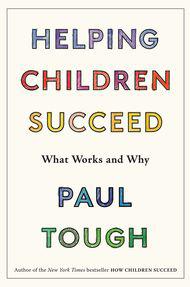
In this keynote, drawing from his new book Helping Children Succeed, Paul Tough provides a new framework for understanding the challenges of low-income children and offers some innovative solutions. It starts with the biological mechanisms that accompany adversity. Children adapt to their surroundings: Stable, loving early environments incline kids to trust and be curious. But when children grow up amidst violence or chaos—what some doctors call “toxic stress”—their stress-response systems are set to look for trouble everywhere. In school, it’s often hard for them to focus, stay calm, and trust their peers and teachers, which makes it difficult to keep up academically. They are more likely to be disciplined or punished, but less likely to receive the genuine help and understanding they need.
If we want to help children develop the character strengths like grit or self-control that Tough first explored in How Children Succeed, we first need a more thorough understanding of adversity, home life, and brain development. In a keynote that distills groundbreaking research from psychologists, economists, and neuroscientists, Tough outlines the small steps parents, educators, and civic leaders can take to meaningfully change student motivation and behavior—especially among kids from low-income backgrounds.