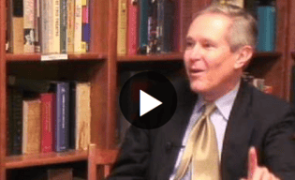






James Fallows
National Correspondent for The Atlantic
Living in China during the exhilarating years of its ascension from sleeping giant to superpower, Fallows captured a complex and seldom seen portrait of a nation. In myth-crushing talks, he throws light on China's mutually beneficial and staggeringly complicated relationship with the U.S. One of America's strongest journalists, Fallows is a key resource to understanding our tenuous ties with China.
Highlights
"Fallows has built a reputation as a shrewd observer of human foibles and political quagmires. Fallows...[gives] us panoramic views of China that are both absorbing and illuminating."
-The New York Times Book Review
Book Speaker
A national correspondent for The Atlantic, James Fallows is one of America's most respected journalists. Whether writing about politics, national security, the economy, or foreign policy, Fallows strives to do one thing: "Make the important interesting." For his always-perceptive, sometimes prescient writing, he has won the National Book Award, the American Book Award and the National Magazine Award. Recently, Fallows' work has focused on chronicling China's explosive growth and its staggering ramifications for America and the world.
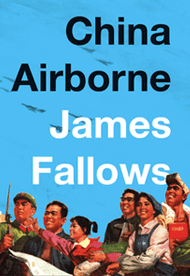
Fallows is the author of several books, including Breaking the News, about the crisis facing contemporary news media, and Blind into Baghdad, about the lead-up to the War in Iraq, which is now required reading in many military programs. His latest book, China Airborne, looks at the staggering rise of airlines and airport infrastructure in China. He has also been a software designer for Microsoft, a speechwriter for President Jimmy Carter, the and the Atlantic's technology columnist.
-
Doing Business in China: How to Get it Right in the Easiest Place on Earth to Get it Wrong
James Fallows delivers a monumental and richly-textured look at everything you need to know about doing business in China. And he means everything. Reporting from China since 2006, Fallows lucidly explains the economic, political, social, environmental and cultural forces that have transformed China—from poverty to world superpower—at breakneck speed. What can American companies learn from China's growth, and why shouldn't we shudder in fear? To what degree are the Chinese and American economies intertwined? Why have most American companies in China remained profitable, even in the economic downturn? In customizable talks, Fallows unpacks the information relevant to your industry and provides a roadmap for sustained growth. Whether you have offices in China, or are thinking about expanding there, Fallows offers a fresh perspective, as well as invaluable advice on how to overcome cultural barriers, how to master negotiating with the Chinese, and how to avoid costly mistakes. This is a breathtaking talk that will help you understand the forces shaping the 21st Century.
-
Postcards from Tomorrow Square
Fallows shares the human stories, charts China's bumpy transition to democracy, and makes sense of both its economic explosion and its environment impact—while showing us what its growth means for us. Foreign Policy: an American Perspective Fallows has covered the major foreign policy stories of our time—from Iraq to North Korea to Iran to the Israeli-Palestinian conflict and beyond. In this talk, he delivers an unsparing look at the challenges to American foreign policy: our actions in various regions, how other countries perceive us, and how upheavals overseas will impact us. In particular, he dissects the planning and execution of the War in Iraq, pinpoints where it all went wrong, shows us what lies ahead, and draws valuable lessons for future military actions.
-
China Airborne
More than two-thirds of the new airports under construction today are being built in China. Chinese airlines expect to triple their fleet size over the next decade and will account for the fastest-growing market for Boeing and Airbus. But the Chinese are determined to be more than customers. In 2011, China announced its Twelfth Five-Year Plan, which included the commitment to spend a quarter of a trillion dollars to jump-start its aerospace industry. Its goal is to produce the Boeings and Airbuses of the future. Toward that end, it acquired two American companies: Cirrus Aviation, maker of the world’s most popular small propeller plane, and Teledyne Continental, which produces the engines for Cirrus and other small aircraft.
In China Airborne, James Fallows documents, for the first time, the extraordinary scale of this project and explains why it is a crucial test case for China’s hopes for modernization and innovation in other industries. He makes clear how it stands to catalyze the nation’s hyper-growth and hyper- urbanization, revolutionizing China in ways analogous to the building of America’s transcontinental railroad in the nineteenth century. Fallows chronicles life in the city of Xi'an, home to more than 250,000 aerospace engineers and assembly workers, and introduces us to some of the hucksters, visionaries, entrepreneurs, and dreamers who seek to benefit from China’s pursuit of aerospace supremacy. He concludes by examining what this latest demonstration of Chinese ambition means for the United States and the rest of the world—and the right ways to understand it.
-
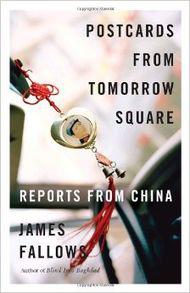
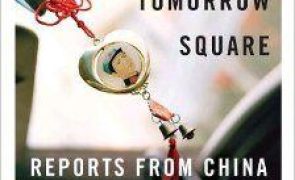
Postcards from Tomorrow Square
"Americans need not be hostile toward China's rise, but they should be wary about its eventual effects. The United States is the only nation with the scale and power to try to set the terms of its interaction with China rather than just succumb. So starting now, Americans need to consider the economic, environmental, political, and social goals they care about defending as Chinese influence grows." - from China Makes, the World TakesĀ
Since December 2006, The Atlantic Magazine's James Fallows has been writing some of the most discerning accounts of the economic and political transformation occurring in China. The ten essays collected here cover a wide-range of topics: from visionary tycoons and TV-battling entrepreneurs, to environmental pollution and how China subsidizes our economy. Fallows expertly and lucidly explains the economic, political, social, and cultural forces at work turning China into a world superpower at breakneck speed. This eye-opening and cautionary account is essential reading for all concerned not only with China's but America's future role in the world.
-
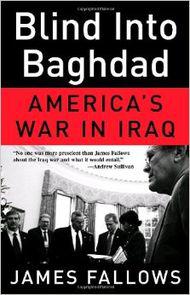
Blind Into Baghdad: America's War in Iraq
In the autumn of 2002, Atlantic Monthly national correspondent James Fallows wrote an article predicting many of the problems America would face if it invaded Iraq. After events confirmed many of his predictions, Fallows went on to write some of the most acclaimed, award-winning journalism on the planning and execution of the war, much of which has been assigned as required reading within the U.S. military. In Blind Into Baghdad, Fallows takes us from the planning of the war through the struggles of reconstruction. With unparalleled access and incisive analysis, he shows us how many of the difficulties were anticipated by experts whom the administration ignored. Fallows examines how the war in Iraq undercut the larger "war on terror" and why Iraq still had no army two years after the invasion. In a sobering conclusion, he interviews soldiers, spies, and diplomats to imagine how a war in Iran might play out. This is an important and essential book to understand where and how the war went wrong, and what it means for America.